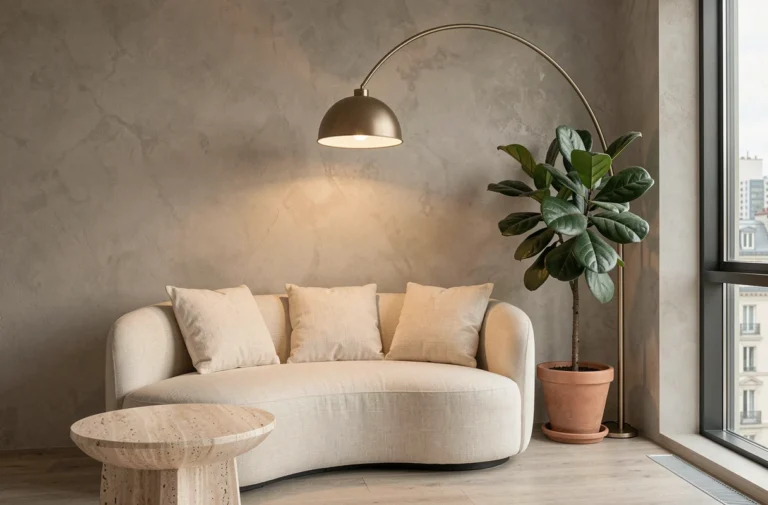
Well-being at home relies on concrete mechanisms related to the physical environment: light, air quality, space organization, noise management. Each of these parameters affects the body and mind on a daily basis, often without us realizing the extent. Improving one’s living environment does not necessarily require major renovations, but a clear understanding of what truly influences health and relaxation at home.
Domestic clutter and psychological well-being: what research observes
The relationship between disorder in a home and the mental state of its occupants is the subject of recent studies. Research published in 2025 in the Journal of Environmental Psychology showed that a high level of clutter in the home was associated with lower psychological well-being and more negative affects. The perception of the beauty of the space would play a partial role in this relationship.
This finding deserves a significant nuance. An analysis published in 2026 reminds us that there is no solid evidence showing that tidying up alone improves mental well-being. The observed link remains correlational: individuals experiencing psychological difficulties may find it harder to maintain an orderly space, without clutter being the direct cause.
In other words, sorting and organizing one’s interior contributes to creating a pleasant environment, but it is not a therapeutic solution in itself. The most realistic approach is to reduce sources of visual overload in the rooms where one spends the most time (living room, bedroom, office), without falling into the obsession of perfect tidiness.
General resources on daily life and well-being, such as those offered on nectardunet.com, allow for exploring different avenues to adapt one’s lifestyle to real needs.

Natural light at home: measured effects on sleep and stress
Natural light is one of the most documented levers in terms of home health. Its action involves the regulation of melatonin, the sleep hormone, whose production directly depends on the light-dark cycle perceived by the retina.
A study published in 2026 on light supplementation in real conditions observed that increased exposure to natural light was linked to better sleep quality, particularly among older adults. The effects included faster sleep onset and a reduction in nighttime awakenings.
Optimizing light without renovation
Before considering renovations, several simple adjustments can modify the amount of light received in a room:
- Clearing window sills (tall plants, decorative objects, thick curtains) to allow maximum brightness, especially in the morning
- Positioning the desk or sofa facing the window rather than with its back to it, so that the retina receives light directly
- Favoring light surfaces (walls, floors, furniture) that reflect light rather than absorb it, which increases the perceived brightness in the entire room
In the evening, the challenge reverses. Reducing exposure to screens and white lighting after sunset facilitates the natural production of melatonin. A warm spectrum lamp (orange hue) in the living room or bedroom is sufficient to mark the transition to rest.
Indoor air quality: an often underestimated health factor
The air inside a home is often more polluted than the outside air. Household products, paints, particle board furniture, scented candles: each of these elements releases volatile organic compounds (VOCs) that accumulate in a poorly ventilated space.
The health effects range from simple discomfort (headaches, fatigue, respiratory irritation) to more serious long-term consequences. Ventilating for at least ten minutes a day, even in winter, remains the most effective and least costly measure.
Reducing sources of domestic pollution
Beyond ventilation, the choice of products used daily makes a real difference. Replacing air fresheners with regular ventilation, opting for unscented cleaning products, or limiting the use of scented candles in closed rooms are concrete actions.
For furniture, environmental labels (A+ on VOC labels in France) help identify the least emissive materials. A new particle board piece releases most of its VOCs in the first weeks: intensively ventilating a room after installing new furniture significantly reduces exposure.
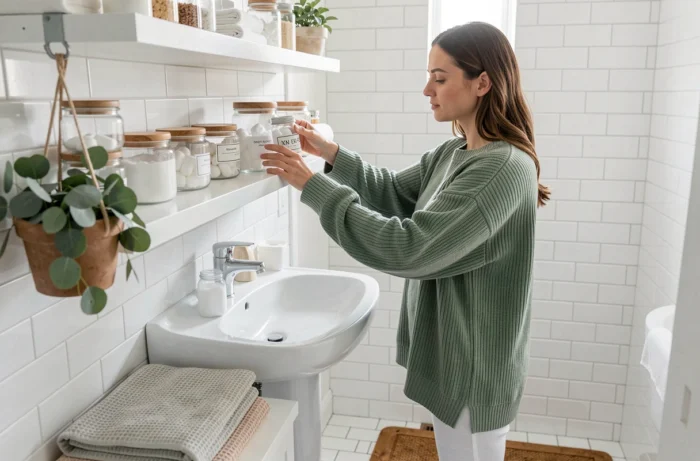
Managing domestic noise and relaxation in daily life
Noise is a chronic stress factor often overlooked in interior design. The sources are multiple: appliances, outside traffic, neighbors, screens playing in the background. The body reacts to noise even below the threshold of conscious discomfort, with an increase in cortisol, the stress hormone.
Some targeted adjustments can reduce the sound load without complete acoustic insulation:
- Placing thick textiles (heavy curtains, rugs, cushions) in living spaces, which absorb reverberations and dampen impact noises
- Turning off passive sound sources (background television, phone notifications) during meals and relaxation times
- Identifying the quietest room in the home and dedicating it to relaxation or reading activities, even if it is small
Relative silence is not a luxury. It is an environmental parameter that influences sleep quality, concentration ability, and the overall feeling of relaxation at home.
Every home has its own constraints. Acting on light, air, noise, and space organization does not require a significant budget, but rather attention to the details that truly shape daily life. The clearest effects appear when these adjustments become habits rather than one-off actions.