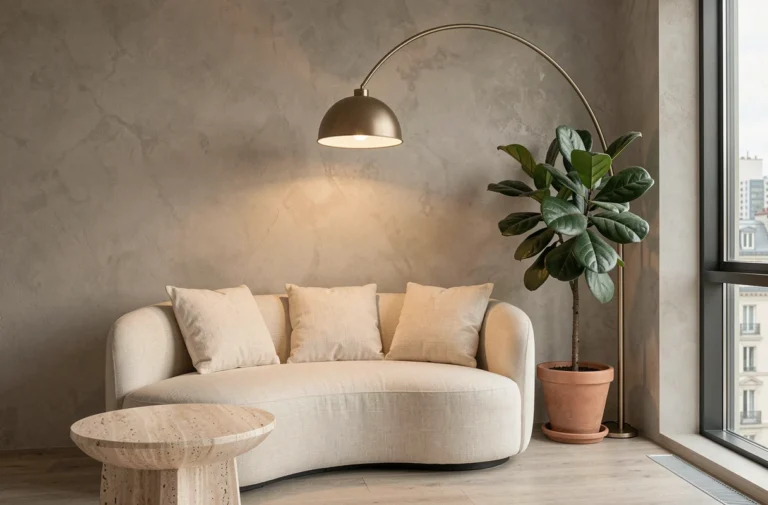
Interior decoration refers to the overall choices of materials, colors, furniture, and objects that define the atmosphere of a living space. Decorating an interior involves articulating technical decisions (finishes, lighting, proportions) with a coherent aesthetic intention. Understanding a few fundamental principles allows for transforming a room without necessarily engaging in heavy renovation work.
Health Labeling of Decorative Materials: A Criterion Before Aesthetic Choice
Before selecting paint, varnish, or flooring, a regulatory aspect deserves attention. In France, construction and decorative products concerned must display their volatile pollutant emissions on a scale from A+ to C. This obligation, in effect since 2013, directly impacts everyday decorative choices.
A product rated A+ emits very few volatile organic compounds into the indoor air. Conversely, a product rated C releases more. When choosing a stain for wood, an adhesive for wall coverings, or paint for a living space, checking this label means integrating air quality into the decorative reflection.
This reflex changes the way a project is approached. Instead of starting solely from a color palette, one begins by filtering products according to their health rating, then refines the aesthetic choice among compliant references. Specialized retailers now offer complete ranges in A+, including in bold shades. The creative approach of Elle Imagine illustrates this desire to combine style and requirements in the design of an interior.
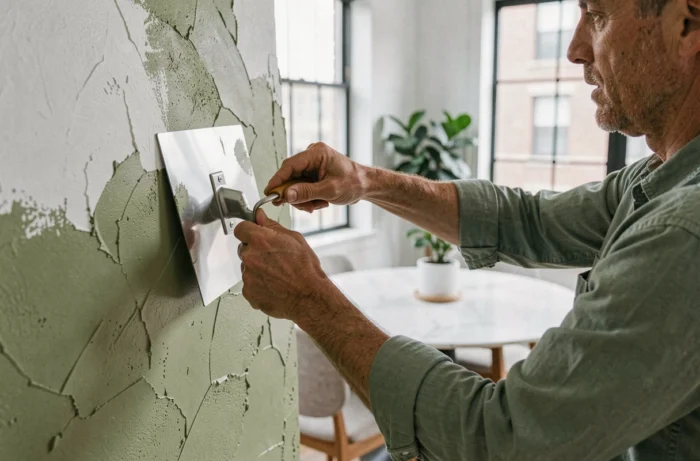
Natural Materials and Upholstery Fabrics: What the Regulation Changes
Wood, linen, wool, raw cotton: natural materials are increasingly prominent in interior decoration. Their texture adds depth to a space and creates an interesting contrast with smooth surfaces like polished concrete or glass.
A less visible point concerns the treatments applied to textiles. Law No. 2025-188 of February 27, 2025, now regulates PFAS (per- and polyfluoroalkyl substances) in several categories of products, including textiles. For curtains, cushion covers, or a throw for a sofa, composition and treatments become selection criteria beyond color.
In practical terms, favoring untreated linen or organic cotton fabric for a living room is no longer just an ecological stance. It is also a response to a regulatory framework that pushes manufacturers to reformulate their products. The range of upholstery fabrics without heavy chemical treatment is expanding, opening up possibilities in natural decoration.
Criteria for Choosing Sustainable Upholstery Fabric
- Check the exact composition on the label: percentage of natural fibers, presence or absence of fluorine-based stain treatments
- Favor recognized certifications (Oeko-Tex, GOTS for organic cotton) that guarantee control of harmful substances
- Test the material’s resistance to natural light, as some untreated textiles age differently depending on exposure
Second-Hand Furniture: Structuring a Style with Reused Pieces
Finding an antique piece of furniture or repurposing a piece to transform it is nothing new. What is evolving is the structuring of the offer. The decree of February 21, 2024, sets acquisition targets for goods from reuse or repurposing in public purchases. This dynamic contributes to professionalizing the second-hand furniture market, with platforms and workshops that guarantee the quality of the offered pieces.
A vintage piece of furniture brings a uniqueness that no catalog can replicate. A patinated 1960s dresser, a reupholstered armchair in contemporary fabric, or a solid wood farm table that has been sanded and oiled create visual anchor points in a room. These objects tell a story and break the uniformity of a completely new interior.
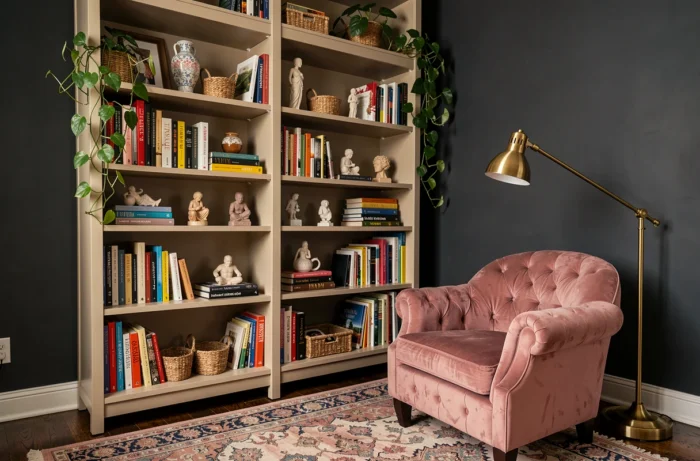
The creative challenge lies in articulating these old pieces with current decor. Placing a raw wood sideboard against a wall painted in a bold shade, or pairing an industrial workshop chair with a designer glass table, creates a dialogue between eras. The controlled contrast between old and contemporary gives character to a space without falling into historical reconstruction.
Color and Light: The Two Levers That Transform a Room Without Heavy Work
Color remains the most accessible lever for radically altering the perception of a space. An accent wall in a deep shade (terracotta, sage green, mineral blue) is enough to redefine the atmosphere of an entire living room. The effect is even more pronounced when this wall serves as a backdrop for an object or artwork that contrasts with it.
Light amplifies or neutralizes each color choice. The same color appears warm under low-temperature lighting and cold under white lighting. Before finalizing a shade, testing it on-site with the final lighting avoids unpleasant surprises.
Combinations That Work According to the Function of the Room
- Living room or lounge: warm and deep shades on a wall, light wood furniture or natural materials, indirect warm temperature lighting for an enveloping atmosphere
- Bedroom: a narrowed palette around two close tones (beige and off-white, gray and pale blue), soft lighting, textiles in natural fibers
- Office or workshop: stimulating color on one wall (mustard yellow, forest green), functional daylight-type lighting, open storage furniture to keep creative tools within reach
- Entryway or hallway: a large mirror and a sculptural light fixture are enough to transform a passage space into a true decorative sequence
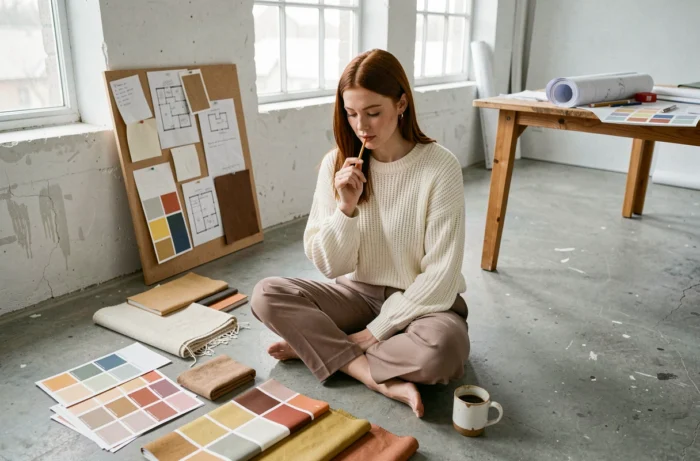
The decoration of an interior relies on concrete trade-offs between materials, colors, furniture, and air quality. Regulations on pollutant emissions and textile treatments push aesthetic choices towards healthier solutions without restricting creativity.
A successful interior often hinges on three or four well-placed decisions rather than an accumulation of decorative objects. The final gesture that changes everything remains the simplest: live with a new arrangement for a few days before adding anything.