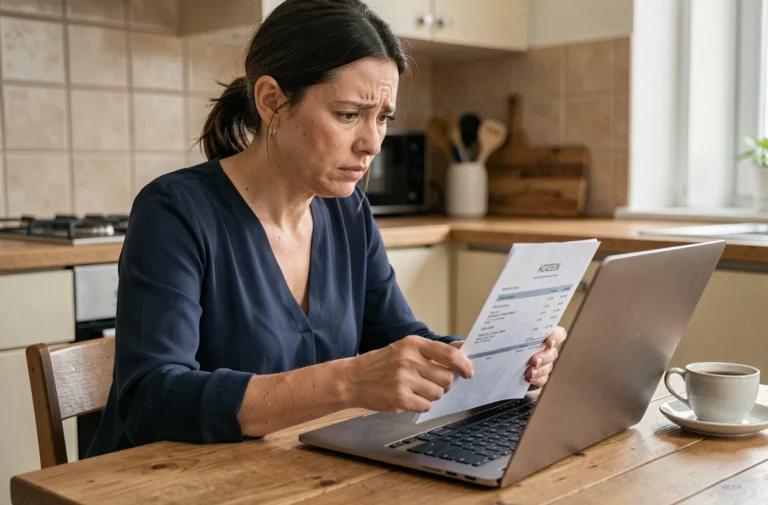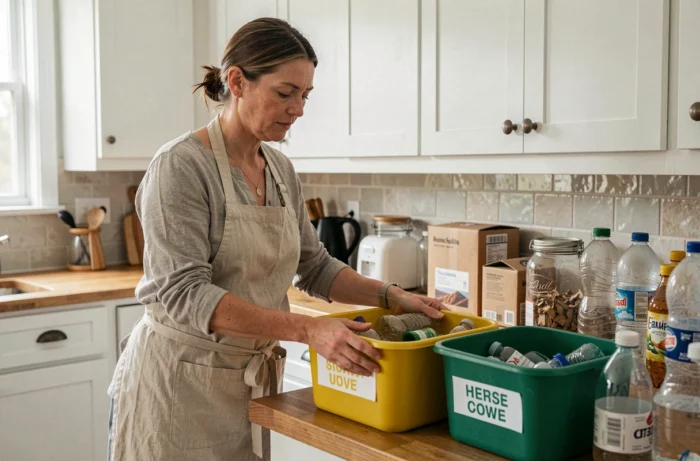
Every week, your trash can fills up with packaging, food scraps, and items that end up buried or incinerated. The circular economy offers a concrete alternative to this pattern: keeping materials in circulation for as long as possible, rather than extracting them, using them once, and then throwing them away. Applying this model in daily life does not require a complete upheaval of your habits, but rather an understanding of a few simple mechanisms.
Actual recyclability of packaging: what the European regulation changes
Have you ever noticed that a package bears the recycling logo without actually being recycled in your municipality? This gap between theory and practice is at the heart of a major European reform.
The regulation (EU) 2025/40, which came into force on February 11, 2025, and will be applicable primarily from August 12, 2026, imposes a new criterion: recyclability must be demonstrated on a large scale. A theoretically recyclable material will no longer be sufficient. From 2035, each package will need to prove that it is actually recycled in existing channels, not just that it could be in a laboratory.
This change affects the very design of products. Manufacturers will need to reduce problematic substances and rethink multi-material assemblies (plastic glued to cardboard, metallized films) that make sorting impossible. Specialized resources like eecom.be allow you to track the evolution of these channels and the obligations that arise for professionals.
For you, the consumer, the consequence will be gradual: fewer misleading packages and more reliable sorting instructions. In the meantime, the most effective reflex remains to favor products with single-material packaging (all cardboard, all glass, all metal) rather than complex combinations.
Biowaste and composting: the obligation to sort at source from 2024
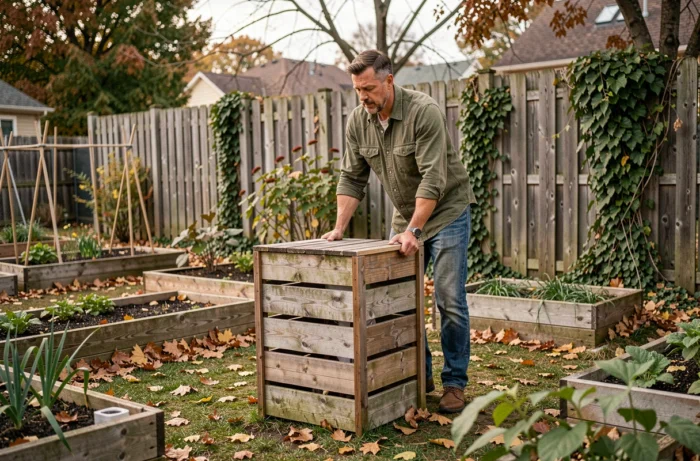
Since January 1, 2024, French municipalities must offer a solution for sorting biowaste at source to all individuals. Peels, meal leftovers, coffee grounds, eggshells: these materials represent a significant portion of the contents of our residual bins.
Why separate these organic wastes from the rest? Because when mixed with household waste, they end up incinerated or buried. Sorted separately, they become compost or biogas, two useful resources.
Solutions vary depending on your area
Your municipality may offer you several systems, and this is where confusion often arises:
- Individual composting, with a bin in your garden, which transforms your kitchen and garden waste into fertilizer for your plants in a few months.
- Shared composting, installed at the foot of a building or in a public space, managed collectively by the neighborhood residents.
- A voluntary drop-off point or separate door-to-door collection, where the municipality collects your biowaste according to a defined schedule.
The right solution depends on your living situation, not a universal guideline. An apartment without a balcony does not offer the same possibilities as a house with a garden. Check with your intermunicipal authority to find out what system is in place in your area.
Reuse of packaging: an underestimated lever for online commerce
We often talk about recycling, but less frequently about reusing. The reuse of packaging is, however, a powerful lever of the circular economy, and the European regulatory framework is gradually beginning to take this issue seriously.
The European regulation on packaging sets a target of 40% reusable packaging by 2030 for certain transport packaging, including those used in e-commerce. In practical terms, the boxes and protective materials used to deliver your online purchases will increasingly need to be designed for multiple cycles of use.
What this changes for your daily purchases
This topic remains little visible in mainstream content, even though it directly affects our habits. Every online order generates a transport package that is often oversized, used once and then discarded.
Some concrete actions already exist:
- Choose merchants who offer reusable return packaging (some clothing and electronics brands do this).
- Consolidate your orders to limit the number of packages and thus the amount of packaging consumed.
- Reuse the boxes you receive for your own shipments or for storage before putting them in recycling.
Reusing a package just one additional time halves its environmental impact. This simple calculation shows that waste prevention also involves consumption choices made before sorting.
Circular economy in daily life: going beyond the sorting gesture
Selective sorting is a step, not an end in itself. The circular economy is based on a clear hierarchy: first reduce waste production, then reuse, then recycle, and only as a last resort eliminate.
In France, the transition to this model is recognized as an objective of the energy transition law. The AGEC law (anti-waste for a circular economy) has strengthened this framework by imposing obligations on producers, distributors, and municipalities.
Three reflexes that change the game
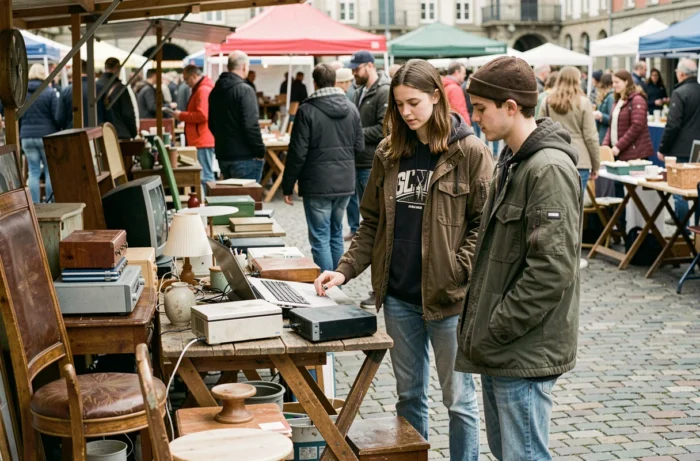
Buying in bulk reduces packaging at the source. Repairing a household appliance instead of replacing it extends the lifespan of the raw materials it contains. Donating or reselling a piece of furniture prevents it from ending up in a landfill.
These actions may seem modest when taken individually. Multiplied by the number of households in a territory, they reduce pressure on natural resources and waste treatment capacities. Prevention remains the most effective lever: a waste that does not exist requires neither collection, nor recycling, nor burial.
The challenge in the coming years lies less in individual actions than in the regulatory frameworks that make them possible. The European regulation on packaging, the obligation to sort biowaste, reuse channels: these systems are gradually structuring a consumption model where materials circulate instead of disappearing. Adapting habits to these changes, even gradually, produces concrete effects on the lifespan of resources and the reduction of environmental impacts.