
Setting a realistic selling price for a house relies on verifiable data, not intuition. The French real estate market in 2026 is characterized by more frequent negotiations and better-informed buyers. Estimating the value of your home before selling requires cross-referencing multiple sources, integrating recent energy constraints, and accepting the limitations of each method.
Energy Performance Certificate and Energy Audit: What Really Changes the Value of a House in 2026
The energy label now directly impacts the selling price. Since January 1, 2025, the energy audit is mandatory for houses rated E, in addition to those rated F and G. A seller listing an energy-intensive house without this audit blocks the transaction as soon as the sales promise is made.
The conversion coefficient of electricity to primary energy has changed from 2.3 to 1.9 since the decree of August 13, 2025. Some homeowners may obtain a better label without undertaking additional work. The ADEME DPE-Audit Observatory allows for the free download of a certificate updating the label.
Specifically, a house heated by electricity that was rated E could shift to D with the new coefficient. This difference of one letter alters buyers’ perceptions and, consequently, the feasible price range. Before any estimation, check if your current DPE incorporates the updated coefficient: you could learn more on Actu Immobilier about the estimation procedures adapted to this change.

Online Property Estimation: Real Reliability of Free Tools
Online estimation simulators rely on databases of past transactions to calculate a price per square meter. The DVF database (Demandes de Valeurs Foncières), accessible for free, lists actual sales that have taken place. Notary barometers and local observatories complement this source.
These tools produce a range, not a fixed price. Their main blind spot concerns the internal characteristics of the property. A simulator does not distinguish between a renovated kitchen and an outdated one, nor between a landscaped garden and a vacant lot.
What DVF Data Shows and What It Hides
DVF transactions sometimes date back several months. In a market where prices fluctuate, a six-month time lag can distort comparisons. The data also do not specify the actual condition of the property at the time of sale, nor any negotiations that led to the final price.
A gap of several points between online estimation and actual selling price remains common. The online tool serves as a starting point, not a conclusion.
Comparison with Nearby Sold Properties: The Pitfalls of the Comparative Method
Comparing your house with similar properties recently sold in the same neighborhood is the most commonly used method by professionals. However, the quality of this comparison depends on criteria often underestimated by sellers.
- The living area alone is not enough: two houses of the same size on the same street can show a significant price difference depending on orientation, floor (for buildings), the presence of an outdoor space, or the level of renovation
- Comparable properties must have been sold in the last six months to reflect the current market state, as field feedback diverges on the relevance of older sales
- The price displayed in online listings is not the final selling price: negotiation margins have increased in 2026, and negotiations have become very frequent again in the first half of the year
Selecting three to five truly comparable properties requires a deep knowledge of the area. A property with an unobstructed view cannot be compared to one that is enclosed, even if both share the same postal address.
Adjusting the Estimation to Your Property’s Specificities
After identifying relevant comparables, each difference must translate into an adjustment. A terrace, a garage, a direct view, recent renovations: these elements modify the value in one direction or another. The estimation relies on precise adjustments, not on a raw average of neighborhood prices.
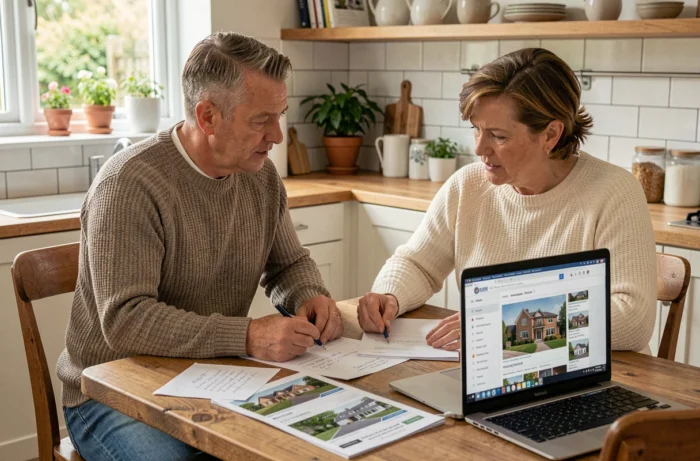
Perceived Value by Buyers: The Factor Sellers Underestimate
The market value of a house and the value perceived by a buyer during a visit are two distinct realities. A properly estimated property can stagnate for weeks if the first impression is unfavorable.
The condition of the paint, the brightness, and the decluttering of rooms directly influence the perception of price. Home staging, which involves preparing the property before visits, affects this perceived value without altering the intrinsic value of the property.
A property that appears move-in ready attracts offers closer to the listed price. Conversely, a cluttered or outdated home leads buyers to mentally calculate the cost of renovations, often excessively.
The Real Estate Listing as the First Filter
Photos, descriptions, and highlighting the property’s strengths constitute the first contact with potential buyers. A poorly written listing or one illustrated with dark photos reduces the number of visits, which lengthens the selling time and ultimately impacts the price.
Caring for the presentation of the property is an integral part of the estimation, as it conditions the price that the market will actually be willing to pay. The difference between estimated value and final selling price often plays out at this stage.
Estimating the value of a house before selling it is not limited to consulting a simulator or comparing a few listings. The updated DPE, the rigorous selection of comparable properties, and the preparation of the home for visits form three concrete levers. In a market where buyers negotiate more, every piece of evidence justifying the listed price counts towards the success of the sale.