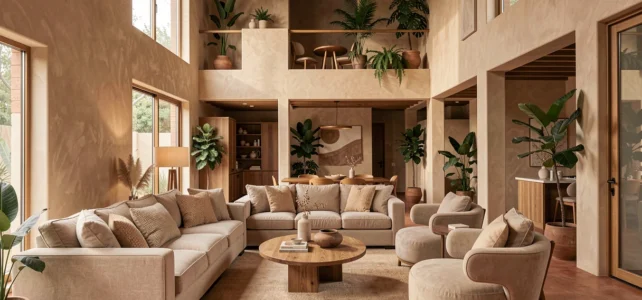
The decor trends of 2026 share a common thread: a return to raw materials, earthy tones, and a quest for sensory comfort. Transforming an interior no longer requires a radical change of furniture, but rather targeted adjustments to textures, colors, and the relationship between space and nature.
1. Lime paint for textured walls
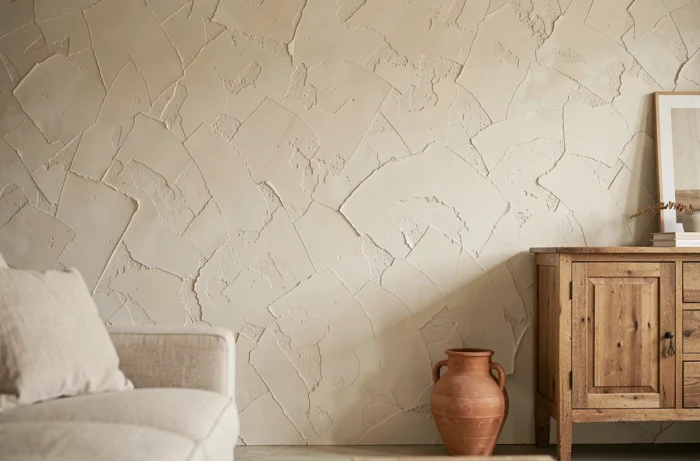
Lime paint gives walls a cloudy, artisanal look that is impossible to achieve with conventional paint. The surface absorbs and diffuses light unevenly, creating visual depth even in a modest room.
Specifically, it is applied in two to three thin layers using a spatula or wide brush. The result varies depending on the pressure applied, ensuring a unique finish from one wall to another. It is particularly suitable for living spaces and bedrooms where natural light can play with the textures.
If you are looking for more decor inspiration on Salon Tendances Habitat, this type of wall finish is among the most sought-after techniques this year.
2. Fluted wood on vertical surfaces
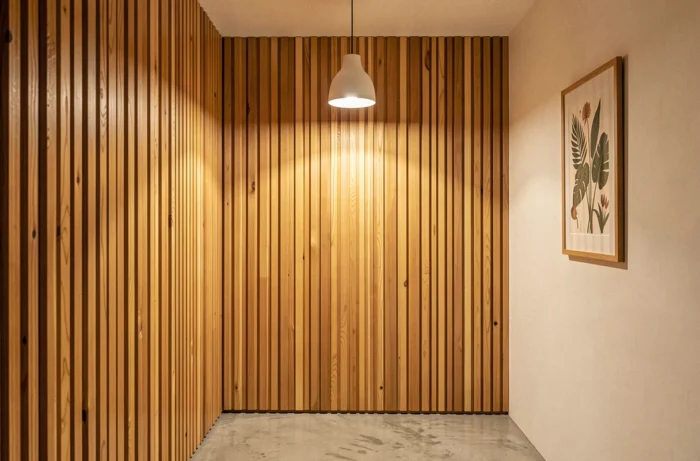
Fluted wood paneling is no longer limited to cabinet facades. It can be found on kitchen islands, headboards, and entryway wall panels. The vertical flutes add rhythm to a flat surface without overwhelming the room.
The choice of wood species matters: light oak enhances a Scandinavian ambiance, while walnut adds more contrast. A fluted panel a few dozen centimeters wide is enough to visually structure an entire wall.
3. Checkerboard floors in kitchens and bathrooms
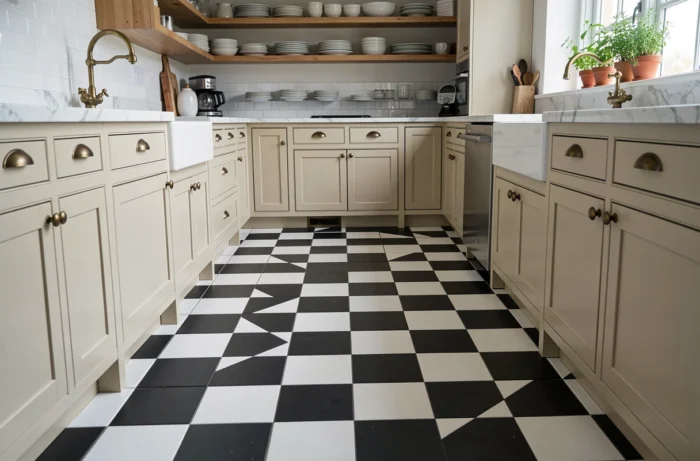
The checkerboard pattern is making a comeback in kitchens and bathrooms. It works well in classic black and white tiles as well as in softer variations (beige and terracotta, sage green and cream).
The graphic effect of the checkerboard structures the room at floor level and directs the gaze. To avoid an overly busy look, the walls and furniture benefit from remaining understated, in solid tones that allow the floor to play its role as a focal point.
4. Biophilic design beyond green plants
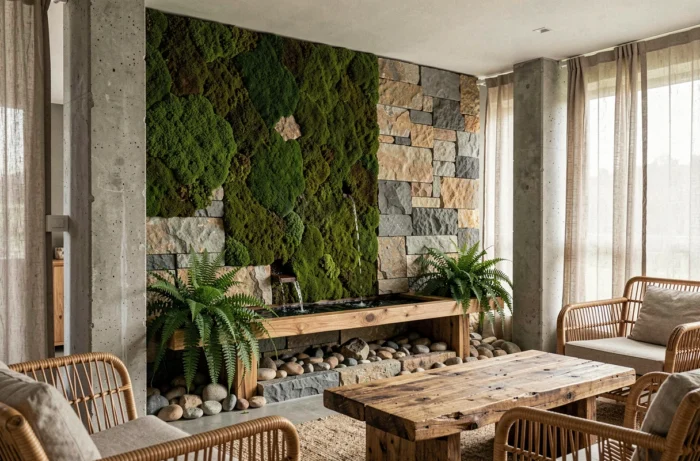
Biophilic design goes beyond the simple presence of potted plants. It involves integrating nature into the very structure of the space: maximized natural light, raw materials (stone, wood, terracotta), and unobstructed views of the outdoors.
This trend has become one of the most dynamic segments of the decoration market in 2026. In practice, this can translate to:
- An indoor vertical garden near a light source, even on a small wall section
- Natural stone or cork coverings instead of plastic imitations
- Enlarged openings or mirrors positioned opposite windows to amplify light
5. Decorative ceiling as the fifth wall
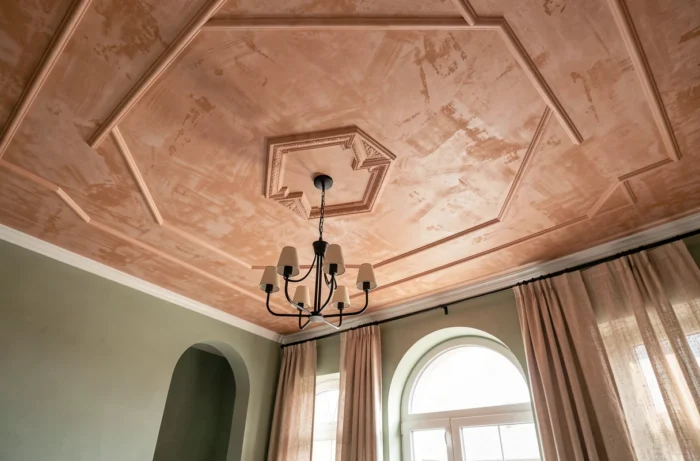
Painting or dressing the ceiling radically transforms the perception of a room. A bold color on the ceiling (deep blue, forest green, terracotta) visually lowers the height and creates a cocooning sensation.
Conversely, a light wood ceiling or discreet patterned wallpaper draws the eye upward and enlarges the perceived space. The ceiling is the most underutilized surface in an interior, and that is precisely why its treatment produces a disproportionate effect.
6. Curved furniture and arched doors
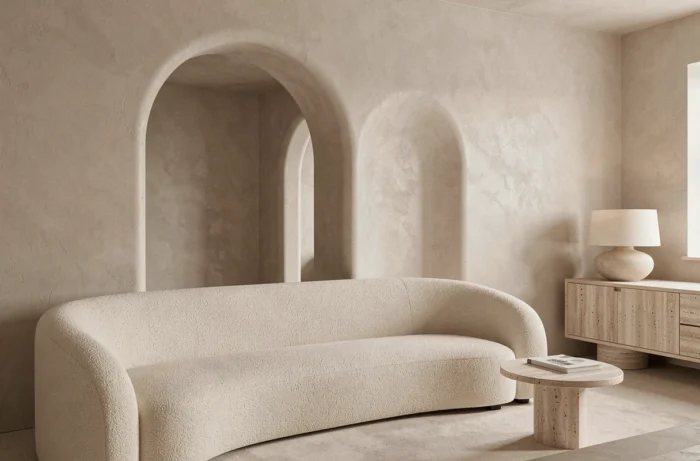
Curved lines soften rooms with sharp angles. A rounded sofa, an oval table, or an arched doorway between two rooms are enough to break the rigidity of a rectangular layout.
Arched doors, in particular, alter visual circulation. They do not require major renovations: adding an arch casing to an existing frame produces the same effect as a structural renovation, at a fraction of the cost.
7. Earthy palette and color saturation
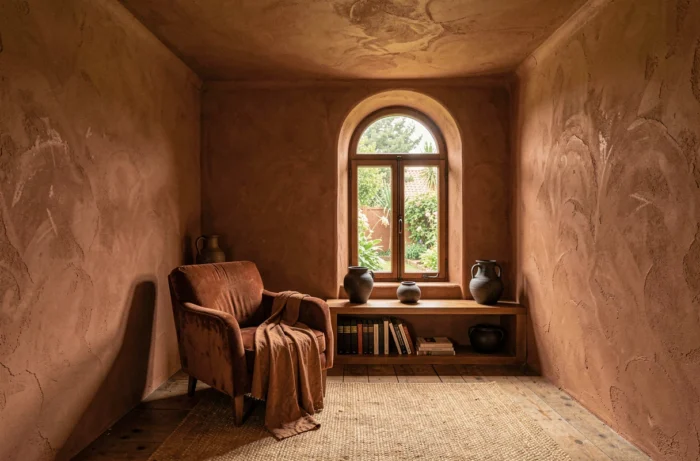
The color saturation technique involves applying the same hue to the walls, moldings, and ceiling. The result unifies the space and eliminates the visual breaks created by the usual wall/ceiling contrasts.
The most commonly used tones remain warm browns, ochres, olive greens, and powder pinks. The effect works best in small rooms, where it creates a cocoon, than in large volumes, where it can become monotonous without variations in texture.
8. Thrifted vintage furniture instead of matching sets
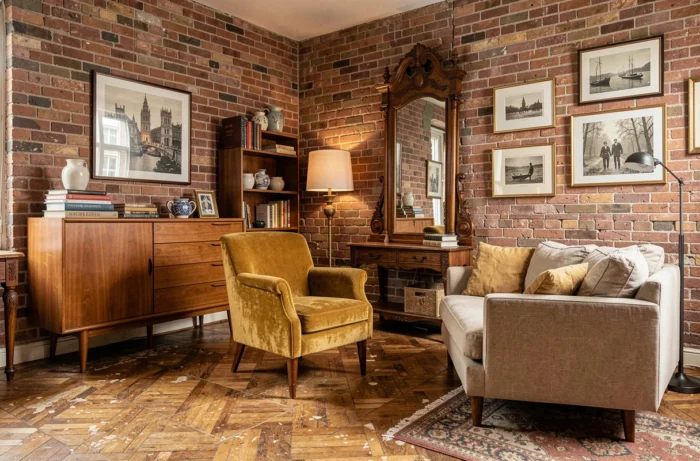
Mixing vintage and second-hand furniture gradually replaces coordinated sets. A 1970s armchair next to a contemporary coffee table creates a visual tension that adds character to the room.
Thrifted furniture brings a uniqueness that no catalog can replicate. Flea markets, thrift shops, and resale platforms are full of solid wood, rattan, or patinated metal pieces that fit into most current styles.
9. Sustainable and traceable materials
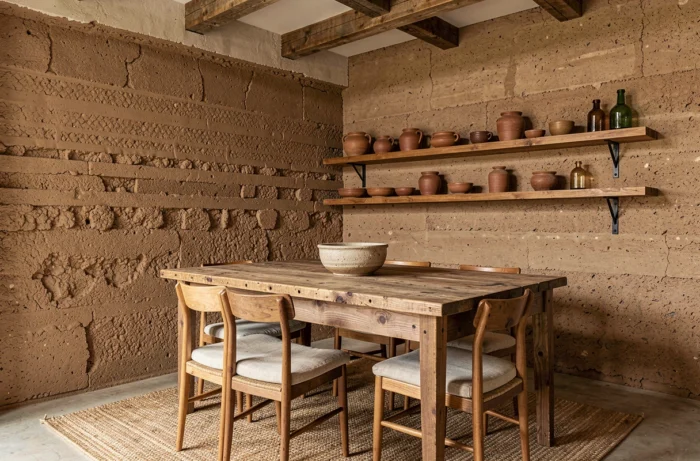
Sustainability in decor goes beyond mere marketing arguments. The European market is moving towards stricter regulatory requirements regarding the traceability of materials and supply chains.
In practice, this translates to an increasing supply of certified wood furniture, textiles made from natural fibers (linen, hemp, wool), and low-VOC paints. Prioritizing local materials also reduces the logistical footprint and facilitates verification of their origin.
10. Warm minimalism to replace all-white aesthetics
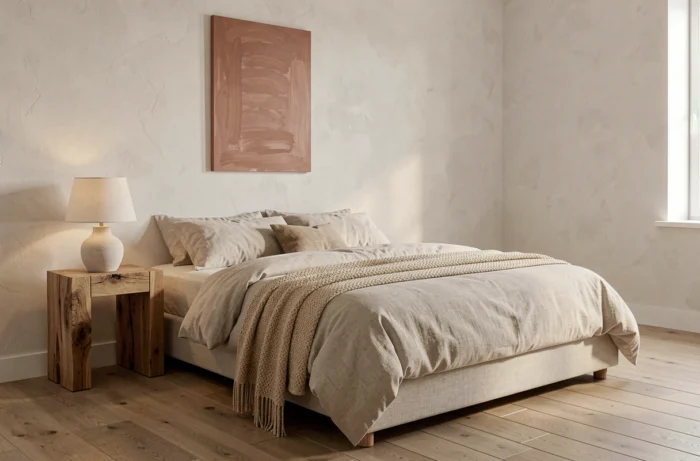
Warm minimalism retains the principles of minimalism (clean lines, few objects, limited palette) while replacing cold whites with softer neutrals. An off-white with yellow or pink undertones radically changes the atmosphere of a room without altering its layout.
Texture does the rest:
- Linen curtains instead of polyester
- Wool or jute rugs instead of synthetic
- Brushed brass hardware instead of chrome
This trend dominates decor searches in 2026 because it requires little investment. A few material substitutions and a change in wall hue are enough to transform a cold interior into a welcoming space without having to buy everything new.