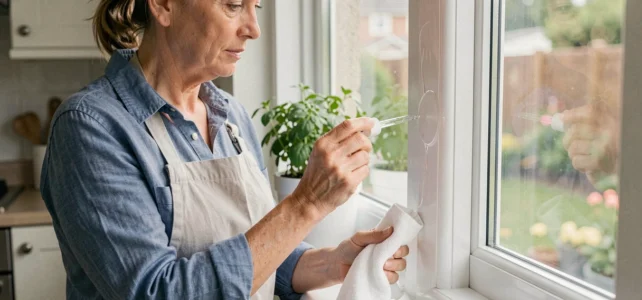
Glue residues on PVC window profiles most often come from the removal of insulating tapes, protective films applied at the factory, or adhesive hooks. The technical problem is twofold: the glue oxidizes over time and hardens, while the smooth surface of PVC does not tolerate aggressive solvents and abrasive tools well. Knowing which product to use, and in what order, prevents tarnishing or permanently scratching the window frame.
Why acetone damages PVC windows
Most DIY guides still present acetone as a reliable remedy for glue marks on plastic. On rigid PVC used in carpentry, this is a mistake. Acetone can dull, soften, and even crack the surface before the glue comes off.
The PVC used in windows (unplasticized polyvinyl chloride, sometimes called uPVC) reacts chemically upon contact with acetone. A whitish film appears within seconds, and the material becomes porous in the treated area. This degradation is irreversible: no polishing can restore the original appearance.
To understand how to remove glue from PVC windows without this type of damage, the logic is to work in stages, from the mildest product to the most active, testing each solution on a hidden area of the profile.
Warm water and neutral detergent: the base before any solvent
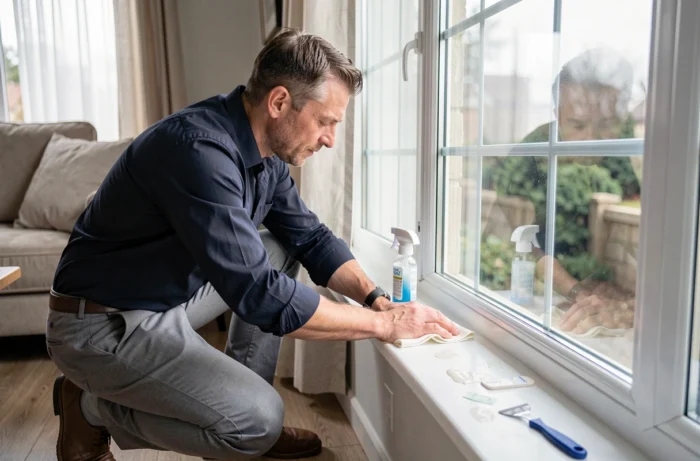
Before reaching for a bottle of chemical product, cleaning with warm water mixed with a non-abrasive neutral detergent dissolves a good portion of fresh residues. This step removes the superficial layer of dirt and softens the glue on the surface.
Apply the solution with a microfiber cloth, let it sit for a few minutes, then rub without excessive pressure. On recent adhesives (protective film removed within weeks of installation), this cleaning is often sufficient.
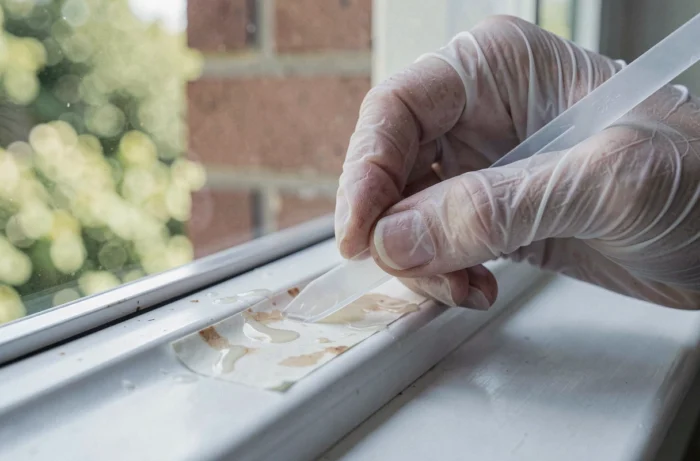
If traces persist, do not scrape with a knife or metal blade. A plastic scraper or the edge of an old credit card can lift the softened residues without scratching the surface. Gentle mechanical action always precedes the use of a solvent.
Solvents compatible with PVC carpentry
When soapy water is not enough, three options remain compatible with rigid PVC, provided a specific protocol is followed.
Cooking oil on adhesive tape residues
Vegetable oil (sunflower, rapeseed) dissolves rubber-based glues found on standard adhesive tapes and protective films. Soak a cloth, place it on the mark, and let it sit for about ten minutes. The glue breaks down and wipes off without scrubbing.
Cooking oil poses no risk to PVC, but it leaves a greasy film. A second wash with warm water and neutral detergent is necessary to achieve a clean profile.
Isopropyl alcohol for tougher glues
Isopropyl alcohol works on acrylic and cyanoacrylate-based glues without attacking PVC. Apply it pure on a soft cloth, rub the affected area, then rinse with clear water.
This solvent evaporates quickly. Work in a ventilated room, with the window open, and wear gloves. Unlike acetone, it leaves no film or mark on the profile.
Diluted white vinegar: limited effectiveness but safe
Diluted white vinegar softens some label glues, but its action remains modest on thick residues. It serves as a useful complement after using oil, not a standalone remover.
Step-by-step method: order of steps to remove glue from PVC
The most common mistake is to apply the strongest solvent available directly. On a PVC window, progressing in stages protects the surface and reduces chemical exposure.
- First, clean the area with warm water and neutral detergent, rub with a microfiber cloth, rinse, and dry.
- Apply cooking oil to a cloth, let it sit, then wipe off the softened residues with a plastic scraper.
- If traces remain, move on to isopropyl alcohol on a clean cloth, rub in circular motions, and rinse with water.
- Finish with a final wash with soapy water to remove any solvent or greasy residue.
Each stage should first be tested on a non-visible part of the profile (the inner face of the frame, for example). A test on a hidden area avoids any unpleasant surprises on the visible side.
Errors that scratch or dull the PVC profile
Some actions worsen the problem instead of solving it.
- Using an abrasive sponge (green side) or steel wool: micro-scratches trap dust and yellow over time.
- Scraping with a utility knife or a knife: PVC gets scratched deeply, and the mark remains visible even after cleaning.
- Applying acetone, white spirit, or cellulose thinner: these solvents attack the material and cause an irreversible film.
- Leaving a chemical product on too long: even a mild solvent can leave a mark if it dries on the surface.
On white profiles, the damage is less visible at first but increases with UV exposure. On tinted or foiled PVC (wood imitation), even the slightest chemical aggression permanently marks the decorative layer.
The most reliable reflex remains the simplest: start with warm water, progress to oil, reserve isopropyl alcohol for stubborn cases, and never use a metal tool on a window profile. A glue residue is always less bothersome than a permanently dulled PVC surface.